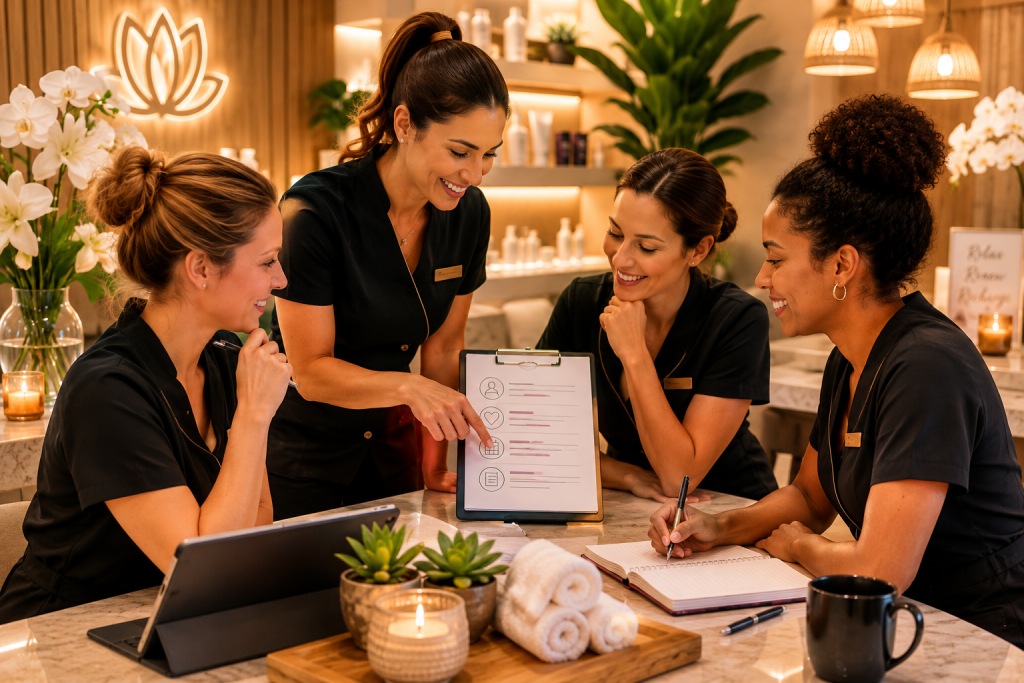
Walk into any thriving spa and you’ll notice something before you ever book a service: the staff actually talk to each other. Not just small talk — real, intentional communication that keeps the front desk, the aesthetician, and the massage therapist all on the same page.
That quiet coordination is the difference between a spa that feels effortless to a client and one that feels disjointed. And for spa owners, communication isn’t a soft skill. It’s a revenue driver.
What Happens When Communication Breaks Down
Picture this: a client books a 90-minute massage and mentions a shoulder injury at check-in. If that note never makes it to the therapist, the client either gets a generic treatment or has to repeat themselves mid-session — both of which chip away at trust.
Multiply that across dozens of clients a week, and small communication gaps become a pattern your clients notice, even if they can’t quite name it.
The Real Benefits of Strong Communication
For your clients — When your team communicates well internally, clients feel known. Preferences, allergies, past treatments, and special requests carry forward seamlessly from booking to checkout. That continuity builds the kind of trust that turns a one-time visitor into a loyal client.
For your team — Clear communication reduces the daily friction that burns staff out. When the front desk knows the schedule changes in real time, and therapists know what’s expected before a client walks in, everyone moves with confidence instead of guessing.
For your business — Spas with strong internal communication see fewer scheduling errors, fewer service mishaps, and stronger reviews. Word of mouth — still the most powerful marketing tool in the spa industry — depends on consistently great experiences, and consistency starts with communication.
Simple Ways to Strengthen Communication at Your Spa
1.Daily huddles. Five minutes before opening to flag VIP clients, special requests, or schedule changes.
2.Shared client notes. A simple system so every team member sees relevant client history before they walk in the room.
3.Open feedback loops. Make it normal for staff to flag issues early, not after a client complains.
The Bottom Line
Great spa experiences aren’t accidental — they’re built on a team that communicates clearly, consistently, and with the client’s experience in mind. When communication is strong, everything downstream gets easier: client satisfaction, staff morale, and ultimately, your bottom line.
At Walking Talking Commercial, we help spas build marketing strategies around what actually keeps clients coming back — and a well-communicating team is always step one.
Ready to strengthen your spa’s brand and client experience? Contact Walking Talking Commercial today.